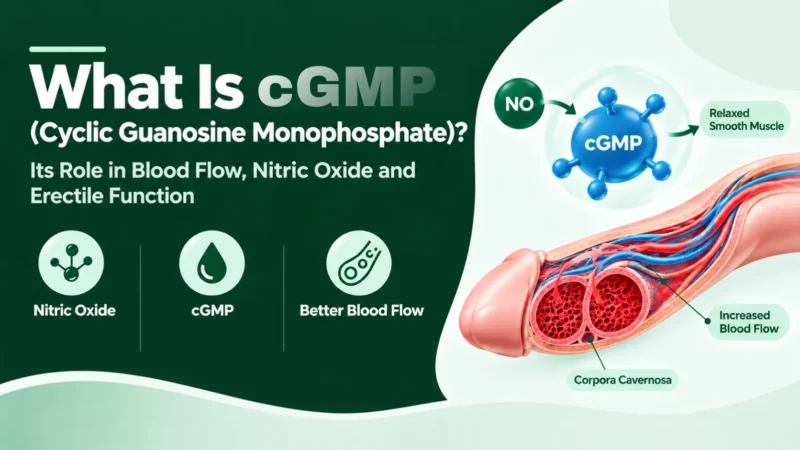
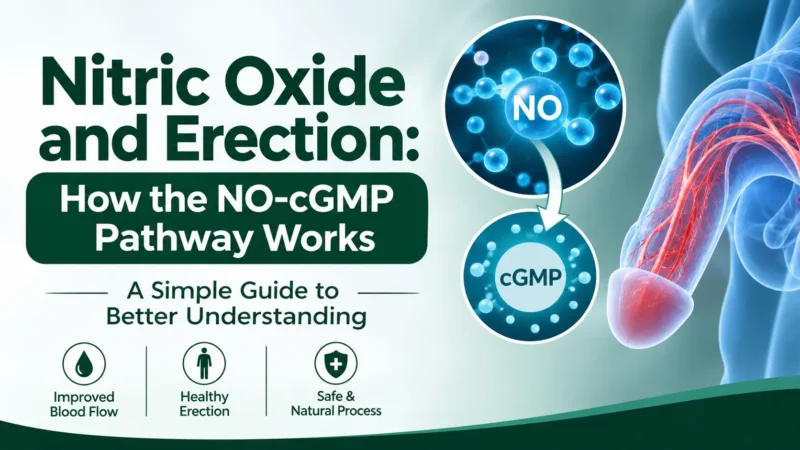


Nitric oxide and erection are closely linked through one of the most important signalling pathways in the human body. When sexual stimulation occurs, nitric oxide (NO) triggers a chain of biochemical events that relax the smooth muscle inside the penis, allowing blood to flow in and produce an erection. This pathway depends on a molecule called cyclic guanosine monophosphate (cGMP), which carries the signal from nitric oxide to the muscle cells. Understanding how nitric oxide and cGMP work together helps explain both normal erectile function and why erectile dysfunction (ED) can develop when this system is impaired.
This article explains what nitric oxide is, how the NO-cGMP pathway produces an erection, how PDE5 inhibitors like sildenafil and tadalafil interact with this system, what can impair nitric oxide signalling, and how to support healthy erectile function through evidence-based lifestyle measures.
What Is Nitric Oxide?
What nitric oxide is
Nitric oxide is a small, highly reactive gas molecule produced naturally inside the body. Despite its simple structure, it is one of the most important signalling molecules in human physiology. In 1992, the journal Science named nitric oxide “Molecule of the Year,” and the scientists who discovered its role in blood vessel relaxation were awarded the Nobel Prize in Physiology or Medicine in 1998.
Nitric oxide is classified as a free radical, meaning it contains an unpaired electron. In the context of erections, its most important property is its ability to act as a vasodilator – a substance that widens blood vessels by relaxing the smooth muscle within their walls. Inside the penis, this vasodilation is what allows blood to fill the corpora cavernosa (the two spongy erectile tissue chambers) and produce an erection.
How the body produces it
Nitric oxide is synthesised from the amino acid L-arginine through an enzymatic reaction. The enzyme nitric oxide synthase (NOS) converts L-arginine into nitric oxide and L-citrulline (a byproduct). This reaction requires several cofactors, including oxygen and a molecule called tetrahydrobiopterin (BH4). When any of these components are deficient or dysfunctional, nitric oxide production can fall below the level needed for normal erectile function.
The L-arginine used in this process comes from dietary protein and from the body’s own protein metabolism. L-citrulline, the byproduct of nitric oxide synthesis, can also be recycled back into L-arginine through a separate pathway in the kidneys. This recycling loop is one reason why L-citrulline supplements have been studied as a way to indirectly raise L-arginine levels and support nitric oxide production.
The role of nitric oxide synthase (nNOS and eNOS)
Three main isoforms (forms) of nitric oxide synthase exist in the body, each produced by a different gene and active in different tissues:
- Neuronal nitric oxide synthase (nNOS): Found in nerve cells, including the nerves that supply the penis. nNOS is responsible for the initial burst of nitric oxide that begins an erection when sexual stimulation occurs. Research has shown that nNOS initiates the erectile response by releasing NO from penile nerve endings in response to signals from the brain and spinal cord.
- Endothelial nitric oxide synthase (eNOS): Found in the endothelium, the thin layer of cells lining the inside of blood vessels. Once the initial nerve-triggered NO release increases blood flow into the penis, the resulting shear stress (the force of blood flowing along the vessel wall) activates eNOS. This produces a sustained release of nitric oxide from the endothelial cells, which maintains the erection. Research indicates that nNOS initiates erection while eNOS provides the sustained maximal erection needed for normal sexual performance.
- Inducible nitric oxide synthase (iNOS): This form is not typically involved in normal erectile function. It is produced in response to inflammation and immune activation and is not calcium-dependent, meaning it produces nitric oxide in larger, less regulated amounts.
The interplay between nNOS and eNOS is essential. nNOS provides the quick, calcium-triggered signal that starts the process, while eNOS provides the sustained signal that keeps the erection maintained. If either form is impaired – for example, by nerve damage (affecting nNOS) or endothelial dysfunction (affecting eNOS) – erectile function can suffer.
How Does Nitric Oxide Help Produce an Erection?
Sexual stimulation and nerve signalling
The erectile process begins in the brain. Sexual arousal, whether from physical stimulation, visual cues, or psychological triggers, activates centres in the brain that send signals down the spinal cord. These signals travel through the cavernous nerves – the autonomic nerve fibres that supply the penis.
The nerves involved are classified as non-adrenergic, non-cholinergic (NANC) nerves. Unlike many other nerve pathways that use adrenaline or acetylcholine as their primary neurotransmitter, these nerves use nitric oxide as their main chemical messenger. This is why nitric oxide is considered the principal neurotransmitter for penile erection.
Nitric oxide release
When the cavernous nerves are activated, calcium enters the nerve endings and binds to a protein called calmodulin. The calcium-calmodulin complex activates nNOS, which rapidly converts L-arginine into nitric oxide. This nitric oxide is released from the nerve endings and diffuses into the adjacent smooth muscle cells of the corpus cavernosum.
At the same time, the initial increase in blood flow that results from this nerve-triggered NO release creates shear stress along the endothelial lining of the penile blood vessels. This mechanical force activates eNOS in the endothelial cells, producing additional nitric oxide. This dual-source release – from nerves (nNOS) and from endothelium (eNOS) – ensures that enough nitric oxide is available to produce and sustain a full erection.
Relaxation of penile smooth muscle
Once nitric oxide enters the smooth muscle cells, it binds to and activates an enzyme called soluble guanylyl cyclase (sGC). This enzyme converts guanosine triphosphate (GTP), an energy-carrying molecule, into cGMP. The cGMP then acts as a second messenger – a molecule that relays the signal from nitric oxide (the first messenger) to the interior of the cell.
cGMP activates protein kinase G (PKG, also called cGMP-dependent protein kinase I). PKG then phosphorylates (adds a phosphate group to) several target proteins and ion channels inside the smooth muscle cell. This sets off a sequence of events that:
- Opens potassium channels, causing the cell membrane to hyperpolarise (become more electrically negative)
- Promotes sequestration of calcium into the endoplasmic reticulum (the cell’s internal calcium storage)
- Blocks voltage-dependent calcium channels, preventing calcium from entering the cell from outside
Increased blood inflow and restriction of venous outflow
The overall effect of these biochemical changes is a sharp drop in the concentration of free calcium inside the smooth muscle cells. Since calcium is the trigger for smooth muscle contraction, this reduction in intracellular calcium causes the smooth muscle to relax.
When the smooth muscle in the walls of the penile arteries and the trabeculae (connective tissue framework) of the corpora cavernosa relaxes, the arteries widen dramatically. This allows a large volume of blood to flow rapidly into the erectile tissue. As the corpora cavernosa fill with blood under pressure, they expand and press against the outer fibrous sheath (the tunica albuginea) of the penis. This compression pinches off the veins that normally drain blood from the penis, restricting venous outflow. The combination of increased arterial inflow and restricted venous outflow raises the pressure inside the corpora cavernosa, producing a rigid erection.
The NO-cGMP Pathway Explained Step by Step
Understanding the NO-cGMP pathway at a biochemical level helps explain how erections work and why certain medicines and health conditions affect erectile function. Here is the pathway in detail:
Step 1: How nitric oxide activates soluble guanylyl cyclase
Nitric oxide produced by nNOS (in nerves) and eNOS (in endothelial cells) diffuses across the cell membrane of the smooth muscle cells. Once inside, NO binds to the haem group (an iron-containing component) of the enzyme soluble guanylyl cyclase (sGC). This binding changes the shape of the enzyme, activating it. sGC is the only known receptor for nitric oxide in this pathway, making it a critical point in the erectile process.
Step 2: How GTP becomes cGMP
Once activated by nitric oxide, sGC catalyses the conversion of guanosine triphosphate (GTP) into cyclic guanosine monophosphate (cGMP). GTP is a high-energy molecule similar to ATP; the conversion involves breaking a bond in GTP and cyclising (forming a ring in) the phosphate group to create cGMP. The cGMP molecule then serves as the second messenger that carries the erection signal forward inside the cell.
Step 3: How protein kinase G (PKG) works
The cGMP produced by sGC binds to and activates protein kinase G (PKG), also known as cGMP-dependent protein kinase I (cGKI). PKG is the main effector enzyme in this pathway. When activated, PKG phosphorylates multiple target proteins within the smooth muscle cell. These include:
- Ion channels: PKG opens potassium channels, allowing potassium ions to leave the cell. This hyperpolarises the cell membrane, making it harder for calcium channels to open.
- Calcium-handling proteins: PKG promotes the uptake of calcium into the endoplasmic reticulum, removing free calcium from the cytosol (the fluid inside the cell).
- Contractile regulatory proteins: PKG can also act on proteins that regulate the contractile machinery of the smooth muscle cell, reducing the sensitivity of the contractile filaments to calcium.
Step 4: How calcium signalling affects smooth-muscle contraction
Smooth muscle contraction is driven by the concentration of free calcium in the cytosol. When calcium levels are high, calcium binds to calmodulin, and this complex activates myosin light-chain kinase (MLCK). MLCK then phosphorylates the myosin light chain, causing the muscle fibres to contract.
When PKG lowers cytosolic calcium (by promoting calcium sequestration and blocking calcium entry) and hyperpolarises the membrane, MLCK activity falls. With less MLCK activity, the myosin light chain is dephosphorylated by myosin light-chain phosphatase, and the smooth muscle relaxes. This relaxation is the mechanical event that allows blood to flow into the penis and produce an erection.
In summary, the complete pathway is:
Sexual stimulation -> Nerve signalling -> nNOS activation -> NO release -> sGC activation -> GTP converted to cGMP -> PKG activation -> Calcium levels drop -> Smooth muscle relaxes -> Blood flows in -> Erection
The endothelial eNOS system then sustains this process by releasing more NO in response to blood flow, maintaining the erection for as long as sexual stimulation continues.
What Is the Role of cGMP in an Erection?
cGMP (cyclic guanosine monophosphate) is the central second messenger in the erectile pathway. While nitric oxide is the signal that begins the process, cGMP is the molecule that actually carries out the instructions inside the smooth muscle cells. Without cGMP, nitric oxide alone cannot produce an erection, because NO works almost entirely through sGC and the cGMP it produces.
The key distinction between nitric oxide and cGMP is their roles:
- Nitric oxide is the first messenger – the signalling molecule released from nerves and endothelial cells. It travels between cells, crossing membranes to reach the smooth muscle.
- cGMP is the second messenger – the molecule produced inside the smooth muscle cell in response to nitric oxide. It acts within the cell to trigger the biochemical changes that lead to muscle relaxation.
cGMP does not act indefinitely. Its levels are tightly controlled by an enzyme called phosphodiesterase type 5 (PDE5), which breaks cGMP down into inactive 5-GMP. This breakdown is a normal part of the process – it allows the erection to subside when sexual stimulation ends. However, if PDE5 breaks cGMP down too quickly or if too little cGMP is produced in the first place, the erection may be weak or short-lived. This is where PDE5 inhibitors come into play.
How Do PDE5 Inhibitors Affect Nitric Oxide Signalling?
PDE5 inhibitors, including sildenafil (Viagra), tadalafil (Cialis), vardenafil (Levitra), and avanafil (Stendra), are the most widely used oral medicines for erectile dysfunction. Understanding how they work requires understanding what PDE5 does and how these medicines interact with the NO-cGMP pathway.
What PDE5 does
Phosphodiesterase type 5 (PDE5) is an enzyme found in high concentrations in the corpus cavernosum of the penis. Its job is to break down cGMP into 5-GMP, an inactive molecule. PDE5 is the most important phosphodiesterase in the erectile tissue. When PDE5 is active, it degrades cGMP, which terminates the NO-cGMP signal and allows the smooth muscle to return to its contracted (flaccid) state.
PDE5 has a catalytic domain (where cGMP is broken down) and a regulatory domain with allosteric binding sites (sites where cGMP can bind without being broken down). When cGMP binds to these allosteric sites, it increases the affinity of the catalytic site for cGMP, accelerating the rate of cGMP breakdown. This is a natural feedback mechanism that helps regulate erection duration.
How sildenafil and tadalafil slow cGMP breakdown
PDE5 inhibitors work by blocking the catalytic site of PDE5, preventing it from breaking down cGMP. Specifically, these medicines are competitive inhibitors – they compete with cGMP for the same binding site on the PDE5 enzyme. Sildenafil, tadalafil, and vardenafil each bind to the catalytic site of PDE5 much more tightly than cGMP itself (sildenafil binds approximately 1,000 times more avidly than cGMP), effectively blocking cGMP breakdown.
A critical point: PDE5 inhibitors do not increase nitric oxide production, nor do they directly increase cGMP production. They work by slowing the breakdown of cGMP that has already been produced in response to nitric oxide. This means cGMP levels rise and persist for longer in the smooth muscle cells, enhancing the relaxation signal and making it easier to achieve and maintain an erection.
However, because PDE5 inhibitors only preserve cGMP that has already been made, they still require nitric oxide release to work. This is a crucial distinction.
Why sexual stimulation is still required
PDE5 inhibitors do not produce erections on their own. They require sexual stimulation to trigger the nitric oxide release that starts the cGMP pathway. Without sexual stimulation, no nitric oxide is released, no cGMP is produced, and there is nothing for the PDE5 inhibitor to protect from breakdown. This is why these medicines are sometimes described as “enhancing” the natural erectile response rather than “causing” erections.
This mechanism also explains why PDE5 inhibitors do not affect sexual desire (libido) – they work on the physical process of erection, not on the psychological or hormonal aspects of sexual arousal. A man taking sildenafil or tadalafil still needs to feel sexually aroused for the medicine to work.
Important medicine safety considerations
PDE5 inhibitors are prescription-only medicines in Australia (Schedule 4). They are generally well-tolerated but are not suitable for everyone. Important safety considerations include:
- Nitrates: PDE5 inhibitors must never be taken with nitrate medicines (such as glyceryl trinitrate for angina). Both medicines lower blood pressure through the NO-cGMP pathway. Combining them can cause a dangerous, potentially life-threatening drop in blood pressure. This is the most important contraindication for PDE5 inhibitors.
- Alpha-blockers: Used for high blood pressure or enlarged prostate, alpha-blockers can interact with PDE5 inhibitors to cause low blood pressure. Dose spacing and medical supervision are required.
- Cardiovascular health: Men with recent heart attacks, unstable angina, or severe heart failure should not use PDE5 inhibitors without specialist cardiology assessment, because sexual activity itself places demands on the heart.
- Side effects: Common side effects include headache, flushing, indigestion, nasal congestion, and back pain (more common with tadalafil). Vision-related side effects are rare but have been reported.
- Duration: Sildenafil and vardenafil typically last 4-6 hours. Tadalafil lasts up to 36 hours. Avanafil has a faster onset and shorter duration. The right choice depends on individual circumstances and should be made with a doctor.
Always consult a registered doctor before starting or changing any ED medicine.
What Can Impair Nitric Oxide Signalling?
Several health conditions and lifestyle factors can impair nitric oxide production or signalling, contributing to erectile dysfunction. Because the NO-cGMP pathway depends on healthy nerves and a healthy endothelium, anything that damages either system can affect erectile function.
Endothelial dysfunction
Endothelial dysfunction is a condition in which the endothelium (the inner lining of blood vessels) loses its ability to produce adequate nitric oxide. This is perhaps the most common underlying cause of vasculogenic ED (erectile dysfunction caused by blood vessel problems). When eNOS activity is reduced or when nitric oxide is destroyed faster than it can be produced, the sustained NO signal needed to maintain an erection is weakened.
Endothelial dysfunction is not limited to the penis – it affects blood vessels throughout the body. This is why ED is increasingly recognised as an early warning sign of broader cardiovascular disease. The penile arteries are smaller (1-2 mm in diameter) than the coronary arteries (3-4 mm), so reduced nitric oxide availability and impaired blood flow often show up as ED before they manifest as heart disease.
Diabetes
Diabetes is one of the most significant risk factors for ED, affecting up to 75% of diabetic men. Diabetes damages the NO-cGMP pathway through several mechanisms:
- High blood sugar injures endothelial cells and reduces eNOS activity, lowering nitric oxide production.
- Oxidative stress (excess reactive oxygen species) is elevated in diabetes. These free radicals destroy nitric oxide before it can reach smooth muscle cells.
- Nerve damage (diabetic neuropathy) can impair nNOS function, reducing the nerve-triggered NO release that initiates erection.
- Reduced cGMP levels have been measured in the erectile tissue of diabetic men, confirming that the entire NO-cGMP pathway is compromised.
Research has shown that diabetic men with ED are less responsive to PDE5 inhibitors because the underlying NO production is already impaired. If there is less cGMP to begin with, protecting it from breakdown has a smaller effect.
Cardiovascular disease
Atherosclerosis (narrowing of arteries due to plaque buildup) reduces blood flow to the penis, directly limiting the inflow needed for erection. But atherosclerosis also damages the endothelium, reducing nitric oxide production. Conditions such as hypertension (high blood pressure), high cholesterol, and metabolic syndrome all contribute to endothelial dysfunction and reduced NO bioavailability.
The link between ED and cardiovascular disease is so strong that many cardiologists now consider new-onset ED in a man over 40 to be a reason to assess cardiovascular risk, even in the absence of other symptoms.
Smoking
Cigarette smoking has a well-established, dose-dependent relationship with erectile dysfunction. Cigarette smoke contains nicotine, carbon monoxide, and oxidant chemicals that damage the endothelium through multiple pathways:
- Reduced eNOS activity: Smoking directly impairs the enzyme that produces nitric oxide in endothelial cells.
- Reduced nNOS expression: Studies have shown lower levels of nNOS protein in the penile tissue of smokers compared with non-smokers.
- Oxidative stress: The reactive oxygen species in cigarette smoke destroy nitric oxide, reducing its bioavailability even when production is normal.
- Endothelial damage: Smoking causes structural and functional damage to endothelial cells, impairing their ability to dilate blood vessels.
Research indicates that for current smokers, smoking cessation can improve endothelial function and partially reverse smoking-related erectile dysfunction. The effect is not immediate, but quitting smoking is one of the most impactful lifestyle changes a man can make for erectile health.
Nerve damage
Since nNOS in the cavernous nerves is responsible for initiating the NO signal, any condition that damages these nerves can impair erectile function. Causes of nerve damage affecting erections include:
- Prostate surgery (radical prostatectomy), which can injure the cavernous nerves
- Spinal cord injury, which disrupts the nerve pathways between the brain and penis
- Diabetic neuropathy, as discussed above
- Pelvic surgery or radiation, which can damage pelvic nerves
- Multiple sclerosis and other neurological conditions
When nerve damage reduces nNOS activity, the initial NO signal is weakened. PDE5 inhibitors may be less effective in these cases because they rely on NO-triggered cGMP production to work.
Other possible contributors
Additional factors that can impair nitric oxide signalling include:
- Aging: Nitric oxide production naturally declines with age, partly due to reduced NOS expression and partly due to age-related endothelial changes.
- Low testosterone: Testosterone supports NOS expression. Low testosterone levels can reduce the amount of nitric oxide synthase available, weakening the NO signal.
- Obesity: Excess body fat increases inflammation and oxidative stress, both of which reduce NO bioavailability.
- Sedentary lifestyle: Lack of physical activity reduces the shear-stress stimulation of eNOS that normally helps maintain healthy NO production.
- Kidney disease: Chronic kidney disease is associated with reduced NO production and increased oxidative stress.
- Psychological factors: While stress, anxiety, and depression do not directly reduce NO production, they can suppress the nerve signalling that triggers NO release, indirectly affecting the pathway.
How Can You Support Healthy Nitric Oxide Function?
Several evidence-based lifestyle measures can help maintain or improve nitric oxide production and support healthy erectile function. These approaches work primarily by improving endothelial health, reducing oxidative stress, and enhancing eNOS activity.
Exercise
Regular physical activity is one of the most effective ways to improve nitric oxide bioavailability. Exercise increases blood flow, which creates shear stress along the endothelium. This mechanical force stimulates eNOS activity, increasing nitric oxide production. A meta-analysis of multiple studies found that moderate and high physical activity were associated with a significantly lower risk of ED, with high physical activity reducing risk by more than half.
Aerobic exercise (such as brisk walking, running, cycling, or swimming) appears particularly beneficial. Research suggests that as little as 90 minutes of running per week or 180 minutes of rigorous outdoor activity per week was associated with a 30% reduced risk of developing ED. The benefits come from improved endothelial function, increased NO bioavailability, better insulin sensitivity, and improved cardiovascular health.
Dietary patterns
Several dietary patterns have been associated with improved erectile function:
- Mediterranean diet: Rich in fruits, vegetables, whole grains, olive oil, nuts, and fish, this diet is high in antioxidants and anti-inflammatory components that may reduce oxidative stress and help preserve NO signalling. A systematic review found that plant-based and Mediterranean-style diets were significantly associated with reduced ED risk.
- Fruits and vegetables: High intake of fruits and vegetables, which are rich in natural antioxidants (including vitamin C, polyphenols, and flavonoids), has been correlated with lower ED risk. Antioxidants help protect nitric oxide from destruction by reactive oxygen species.
- Nuts: Nut consumption has been associated with lower ED risk in observational studies.
- Reducing fat and sugar: High intakes of saturated fat and refined sugar are associated with increased oxidative stress and reduced NO bioavailability.
These dietary patterns support erectile health through the same mechanisms that support cardiovascular health: reduced inflammation, improved endothelial function, and better metabolic regulation.
Smoking cessation
Quitting smoking is one of the most important steps a smoker can take to protect nitric oxide signalling. Research shows that smoking damages eNOS and nNOS activity and increases oxidative stress. Smoking cessation can strengthen the endothelium and partially reverse diminished erectile function, although the degree of recovery depends on the duration and intensity of smoking history.
Management of cardiovascular risk factors
Controlling the medical conditions that impair endothelial function can help preserve nitric oxide production:
- Blood pressure management: Treating hypertension reduces ongoing damage to the endothelium. Some blood pressure medicines (particularly angiotensin II receptor blockers) may have a more favourable effect on erectile function than others.
- Cholesterol management: Lowering elevated cholesterol reduces atherosclerotic damage to blood vessels.
- Blood sugar control: In diabetes, tight glycaemic control can help reduce oxidative stress and slow endothelial damage, although existing nerve damage may not be fully reversible.
- Weight management: Weight loss in overweight or obese men can improve insulin sensitivity, reduce inflammation, and increase endothelial NO production.
L-arginine and L-citrulline supplements
L-arginine is the amino acid from which nitric oxide is synthesised, and L-citrulline is converted into L-arginine in the kidneys. Because of this biochemical relationship, both have been studied as potential supplements for erectile function.
L-arginine: A meta-analysis of 10 randomised controlled trials (540 patients) found that L-arginine supplements (1,500-5,000 mg per day) significantly improved erectile function compared with placebo in men with mild to moderate ED. Improvements were seen in erectile function, intercourse satisfaction, orgasmic function, and overall satisfaction. However, the adverse effect rate was higher than placebo (8.3% vs 2.3%), with side effects including headache, gastrointestinal discomfort, and insomnia. Notably, L-arginine should not be taken with sildenafil or other PDE5 inhibitors due to the risk of excessive blood pressure reduction.
L-citrulline: A small study of 24 men with mild ED found that L-citrulline supplementation (1.5 g/day) improved erection hardness scores from 3 (mild ED) to 4 (normal) in 50% of participants, compared with 8.3% in the placebo group. L-citrulline is better absorbed orally than L-arginine because it escapes the extensive liver metabolism that affects L-arginine. However, the researchers noted that L-citrulline was less effective than PDE5 inhibitors, at least in the short term.
Important cautions: These supplements are not a replacement for medical treatment. The evidence is strongest for men with mild ED, and the effects are modest compared with prescription medicines. Side effects, drug interactions (especially with blood pressure medicines and PDE5 inhibitors), and variable product quality are real concerns. No supplement can cure ED, and anyone considering these products should discuss them with a doctor first. The quality and purity of dietary supplements are not regulated to the same standard as prescription medicines.
When Should You Seek Medical Advice for Erectile Dysfunction?
Erectile dysfunction is a medical condition, not just a personal inconvenience. Because ED is often linked to underlying cardiovascular, metabolic, or neurological conditions, it should be assessed by a healthcare professional rather than self-treated.
Clinical assessment
A doctor evaluating ED will typically:
- Take a detailed medical and sexual history
- Perform a physical examination
- Order blood tests to check for diabetes, cholesterol levels, testosterone levels, and other markers
- Assess cardiovascular risk, since ED can be an early sign of heart disease
- Review all current medicines, as some can contribute to ED
- Evaluate for psychological factors such as depression or anxiety
This assessment is important because treating an underlying condition (such as undiagnosed diabetes, low testosterone, or depression) may resolve ED more effectively than simply prescribing a PDE5 inhibitor.
Potential underlying causes
ED can result from:
- Vascular causes (atherosclerosis, endothelial dysfunction) – the most common
- Neurological causes (nerve damage from diabetes, surgery, or spinal cord injury)
- Hormonal causes (low testosterone, thyroid disorders)
- Psychological causes (depression, anxiety, relationship problems)
- Medicine-induced causes (some antidepressants, blood pressure medicines, and other drugs)
- Lifestyle factors (smoking, alcohol, sedentary lifestyle, obesity)
Often, ED has more than one contributing cause. A thorough medical evaluation helps identify all relevant factors.
When symptoms need prompt medical attention
Certain situations require urgent or prompt medical care:
- Sudden onset of ED: If erectile function declines suddenly, especially in a younger man, it may indicate a new medical condition that needs investigation.
- ED with chest pain or cardiovascular symptoms: Since ED and heart disease share the same underlying mechanism (endothelial dysfunction), new ED accompanied by chest pain, shortness of breath, or exercise intolerance needs prompt cardiovascular assessment.
- PDE5 inhibitor ineffectiveness: If PDE5 inhibitors are not working, this may indicate more severe endothelial dysfunction or nerve damage that requires further investigation.
- Prolonged erection (priapism): An erection lasting more than 4 hours is a medical emergency that requires immediate treatment to prevent permanent tissue damage. This can occur as a side effect of certain ED treatments.
- Persistent ED affecting quality of life: Even when not an emergency, persistent ED warrants medical attention, as effective treatments are available.
In Australia, you can speak with your GP, visit a urologist, or call Healthdirect on 1800 022 222 for free health advice from a registered nurse, available 24 hours a day.
Medical disclaimer: This article is for educational purposes only and does not constitute medical advice. Erectile dysfunction can be a sign of underlying health conditions, including cardiovascular disease and diabetes. Always consult a registered healthcare professional for diagnosis and treatment of any medical condition. In Australia, medicines for erectile dysfunction are prescription-only (Schedule 4) and must be prescribed by a qualified doctor.
Was this article helpful?
Your feedback helps us improve our health guides.
Quick Answers to Your Questions
Find helpful information about our products, ordering process, delivery and more.
01 What does nitric oxide do during an erection?
Nitric oxide is the primary signalling molecule that triggers an erection. When sexual stimulation occurs, nitric oxide is released from nerve endings (via nNOS) and from the endothelial lining of penile blood vessels (via eNOS). It diffuses into the smooth muscle cells of the corpus cavernosum and activates the enzyme soluble guanylyl cyclase, which produces cGMP. The cGMP then triggers a cascade that lowers intracellular calcium, causing the smooth muscle to relax. This relaxation allows blood to flow into the penis and produce an erection.
02 Is nitric oxide the same as cGMP?
No. Nitric oxide and cGMP are different molecules with different roles. Nitric oxide is the first messenger - the signalling molecule released from nerves and endothelial cells. cGMP (cyclic guanosine monophosphate) is the second messenger - the molecule produced inside smooth muscle cells in response to nitric oxide. Nitric oxide activates the enzyme (soluble guanylyl cyclase) that makes cGMP, and cGMP is the molecule that actually carries out the biochemical changes leading to muscle relaxation. Both are essential, but they serve different functions in the pathway.
03 Does sildenafil increase nitric oxide?
No. Sildenafil and other PDE5 inhibitors do not increase nitric oxide production. They work by inhibiting the enzyme PDE5, which breaks down cGMP. By blocking PDE5, these medicines slow the breakdown of cGMP that has already been produced in response to nitric oxide, allowing cGMP levels to remain higher for longer. This enhances the natural NO-cGMP signalling pathway, but it does not add more nitric oxide. This is why sexual stimulation (which triggers NO release) is still required for PDE5 inhibitors to work.
04 Can low nitric oxide contribute to ED?
Yes. Reduced nitric oxide production or bioavailability is one of the most common underlying mechanisms of erectile dysfunction. Conditions that reduce NO include endothelial dysfunction (which impairs eNOS), diabetes (which damages both endothelium and nerves), smoking (which reduces NOS activity and increases oxidative stress that destroys NO), cardiovascular disease (which narrows arteries and damages endothelium), and nerve damage (which impairs nNOS). When nitric oxide levels are low, less cGMP is produced, and the smooth muscle does not relax sufficiently to allow a full erection.
05 Do nitric oxide supplements improve erections?
Some evidence suggests that L-arginine and L-citrulline supplements may modestly improve erectile function in men with mild ED, likely by providing more of the amino acid substrate needed for NO production. A meta-analysis found L-arginine (1,500-5,000 mg/day) improved erectile function scores in mild to moderate ED, and a small study found L-citrulline (1.5 g/day) improved erection hardness in 50% of men with mild ED. However, these supplements are less effective than prescription PDE5 inhibitors, the evidence is limited to mild ED, and they carry risks of side effects and drug interactions. L-arginine should not be combined with sildenafil or nitrates. No supplement can cure ED, and anyone considering supplements should consult a doctor first.
06 What is the difference between nitric oxide and PDE5?
Nitric oxide and PDE5 are on opposite sides of the same pathway. Nitric oxide is the signalling molecule that promotes erection by triggering cGMP production. PDE5 (phosphodiesterase type 5) is the enzyme that breaks cGMP down, which ends the erection signal and allows the penis to return to a flaccid state. In a healthy system, nitric oxide production and PDE5 activity are balanced - NO produces enough cGMP for an erection, and PDE5 breaks it down when stimulation ends. In ED, this balance is often tipped: either too little NO is produced, or PDE5 breaks cGMP down too quickly. PDE5 inhibitors work by tipping the balance back toward cGMP accumulation.