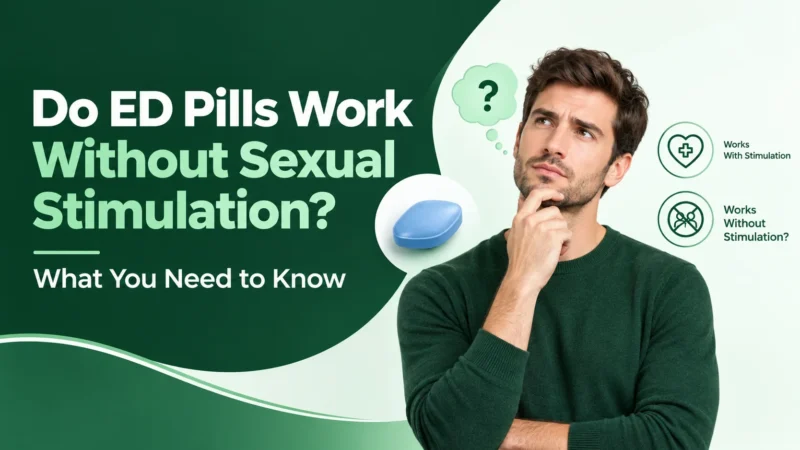


Introduction: Do You Need Sexual Stimulation for ED Pills to Work?
If you are considering or currently taking erectile dysfunction (ED) medication, you may be wondering whether the pill alone is enough to produce an erection or whether sexual stimulation is still necessary. It is one of the most common questions men have about ED treatment, and understanding the answer is key to getting the results you expect.
The short answer is that oral erectile dysfunction medicines such as sildenafil (Viagra) and tadalafil (Cialis) generally need sexual arousal or stimulation to help produce an erection. Taking a pill does not usually cause an automatic erection. The medicine works by supporting the body’s natural erection response, which begins in the brain and nervous system, it does not independently trigger the process on its own.
It helps to briefly distinguish three related but different concepts: sexual desire (libido) is the interest in sexual activity; arousal is the physical and mental state of becoming sexually excited; and erection is the physical result of increased blood flow to the penis. ED pills act on the erection part of this process, not on desire or arousal directly.
In this article, you will learn how ED pills work, why sexual stimulation matters, how timing and food can affect results, what to do if the medicine does not work as expected, and the key safety information every user should know. Whether you are taking sildenafil, tadalafil, or another prescribed ED medicine, this guide will help you understand what to expect and how to get the best and safest results.
The Quick Answer: Do ED Pills Require Sexual Stimulation?
Most oral ED pills depend on the body’s natural erection response to work. When you take an ED pill, the medicine becomes active in your bloodstream and begins to inhibit the PDE5 enzyme, which normally breaks down cGMP a molecule that helps blood vessels in the penis relax and fill with blood. However, this mechanism only matters if the initial steps of the erection process have been set in motion by sexual arousal.
When a person takes an ED pill without becoming sexually aroused, the medicine may still be active in the body, the PDE5 enzyme is being inhibited, but without the release of nitric oxide that comes from sexual stimulation, there is no cGMP to preserve. In practical terms, the medicine is “ready” but has nothing to act on. This is why an erection is not likely to occur automatically just because the pill has been taken.
Physical stimulation, mental arousal, or a combination of both can contribute to initiating the erection response. Touch, caressing, kissing, sexual thoughts, and erotic visual or emotional cues can all activate the nerve pathways that release nitric oxide. Different people respond to different types of stimulation, and the specific circumstances matter.
Results differ between individuals for many reasons – age, overall health, underlying medical conditions, stress levels, the specific medicine and dose, and whether the instructions for food and alcohol have been followed. The same medicine that works well for one person may produce a different response in another, which is why ED treatment should always be individualised by a healthcare professional.
What Counts as Sexual Stimulation?
Physical sexual stimulation
Physical sexual stimulation includes touch, caressing, kissing, and other intimate contact. It also includes masturbation and partnered sexual activity. Physical stimulation activates sensory nerve endings in the penis and surrounding areas, which send signals through the spinal cord to the nerves supplying the erectile tissue. These nerve signals trigger the release of nitric oxide, the chemical messenger that starts the cascade leading to an erection.
For many men, physical stimulation is the most reliable way to activate the erection response, particularly when taking an ED pill. The medicine enhances the body’s reaction to this stimulation, but it does not replace the need for it.
Mental and psychological arousal
Mental arousal includes sexual thoughts, fantasies, and erotic visual or emotional cues. The brain and nervous system play a central role in erections, the process begins in the brain, which processes sexual stimuli and sends signals through the spinal cord to the peripheral nerves supplying the penis. This is why thoughts and emotions alone can sometimes be enough to initiate an erection, even without physical touch.
Mental arousal alone can sometimes be sufficient, particularly in men whose ED does not have a significant vascular or neurological component. However, for many men especially those with vascular risk factors such as diabetes or cardiovascular disease mental arousal alone may not be enough, and physical stimulation provides the additional nerve signalling needed to achieve a full erection.
Does sexual stimulation always produce an erection?
Sexual arousal does not guarantee an erection. Stress, fatigue, illness, medication effects, and circulation problems can all interfere with the erection response even when arousal is present. The body’s ability to translate stimulation into an erection depends on the health of the blood vessels, nerves, and erectile tissue, as well as on psychological factors.
Comfort, consent, and reduced performance pressure also play an important role. When a person feels relaxed and safe, the parasympathetic nervous system which controls the erection response functions more effectively. When performance anxiety is present, sympathetic nervous system activity increases, which works against the erection process. This is why the emotional and relational context of sexual activity matters, not just the physical mechanics.
How Does an Erection Normally Happen?
To understand why ED pills need sexual stimulation, it helps to understand how an erection occurs naturally. The process involves a precise sequence of events involving the brain, nerves, chemical messengers, blood vessels, and erectile tissue.
The brain and nerves: Starting the response
An erection begins in the brain. Sexual thoughts, visual cues, emotional responses, or physical touch are processed by the brain, which sends signals through the spinal cord to the peripheral nerves supplying the penis. These nerves are part of the autonomic nervous system — specifically the parasympathetic division, which controls the erection response. Without this initial signalling from the brain and nerves, the rest of the erection cascade does not begin.
Nitric oxide: The chemical messenger involved in erections
When the nerve signals reach the erectile tissue, they stimulate the release of nitric oxide (NO). Nitric oxide is the key chemical messenger that triggers the next step in the erection process. It acts on the smooth muscle cells in the walls of the penile blood vessels, telling them to relax. Without nitric oxide, the blood vessels do not receive the signal to widen, and blood flow does not increase.
cGMP: How penile smooth muscles relax
Nitric oxide activates an enzyme called soluble guanylate cyclase, which increases the production of cyclic guanosine monophosphate (cGMP). cGMP is the molecule that directly tells the smooth muscle in the penile arteries and erectile tissue to relax. When cGMP levels rise, the smooth muscle relaxes, the blood vessels widen, and blood can flow into the erectile chambers. This is the step that PDE5 inhibitors act on — by preventing the breakdown of cGMP, they help it remain active for longer.
Increased blood flow: How the penis becomes firm
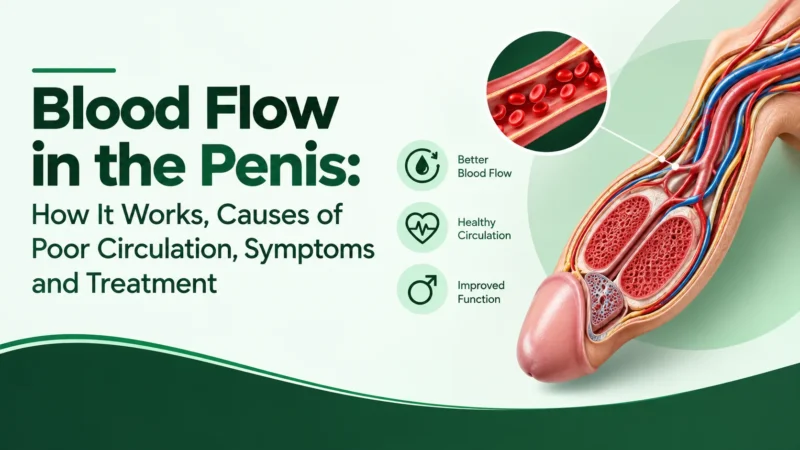
As the smooth muscle relaxes and the penile arteries widen, blood flows into the corpora cavernosa — the two spongy erectile chambers that run along the length of the penis. The incoming blood fills the erectile spaces, causing them to expand. This expansion produces the increase in penile size and firmness that characterises an erection. The penis becomes firm because blood is flowing in and being retained, not simply because more blood is passing through.
Venous compression: How an erection is maintained
As the corpora cavernosa expand with blood, they press outward against the tunica albuginea — a tough fibrous covering that surrounds the erectile chambers. This expansion compresses the veins that would normally drain blood away from the penis. By restricting venous outflow, the body traps blood within the erectile tissue, maintaining the erection. This veno-occlusive mechanism is essential without it, blood would flow in and straight back out, and the erection would not be maintained.
Detumescence: Why the penis returns to its resting state
When sexual stimulation and arousal decrease, the nerve signals that sustained the erection diminish. The sympathetic nervous system becomes more active, smooth muscle tone increases, and the blood vessels narrow. Arterial inflow reduces, the venous drainage pathways reopen, and blood flows out of the erectile tissue. The penis returns to its flaccid state. This is a normal and healthy part of the erection cycle.
How Do ED Pills Work? Understanding the Science
What are PDE5 inhibitors?
PDE5 inhibitors are a class of medicines that include sildenafil (Viagra), tadalafil (Cialis), vardenafil (Levitra), and avanafil (Stendra). They are the most commonly prescribed oral treatments for erectile dysfunction. All PDE5 inhibitors work on the same basic mechanism — they block the PDE5 enzyme — but they differ in onset time, duration of action, and specific prescribing instructions.
How sildenafil helps support an erection
Sildenafil works by inhibiting the PDE5 enzyme, which normally breaks down cGMP in the erectile tissue. By blocking PDE5, sildenafil allows cGMP to remain active for longer when sexual stimulation has triggered its production. This means that when nitric oxide is released during sexual arousal, the resulting cGMP is not broken down as quickly, the smooth muscle stays relaxed for longer, and blood can continue to flow into and remain in the erectile tissue. Sildenafil typically begins working within 30 to 60 minutes and its effects last for about 4 to 6 hours.
How tadalafil supports the erection process
Tadalafil also works by inhibiting the PDE5 enzyme, but it has a longer duration of action than sildenafil. A single dose of tadalafil can remain effective for up to 36 hours, which has earned it the nickname “the weekend pill.” However, this long duration does not mean a continuous erection for 36 hours — it means the medicine is active in the body for that period, and sexual stimulation can trigger an erection at any point during that window. Tadalafil typically begins working within 30 to 45 minutes.
How vardenafil and avanafil work
Vardenafil and avanafil work on the same PDE5 inhibition mechanism as sildenafil and tadalafil. Vardenafil has a similar onset and duration profile to sildenafil. Avanafil is notable for its faster onset it may begin working within 15 to 30 minutes — and a shorter duration of action. Each medicine has its own prescribing instructions, and they are not interchangeable. The choice of medicine depends on individual circumstances and should be made by a healthcare professional.
Why these medicines support arousal rather than create sexual desire
PDE5 inhibitors act on the physical erection mechanism — specifically the nitric oxide–cGMP pathway not on the brain centres that control sexual desire. They help the body respond to sexual stimulation by preserving cGMP, but they do not increase libido or create sexual thoughts. This is an important distinction: a man who has low sexual desire will not suddenly become interested in sex because he has taken an ED pill. The medicine addresses the physical ability to achieve an erection, not the psychological drive to engage in sexual activity.
What ED pills can and cannot do
ED pills can help men with erectile dysfunction achieve and maintain an erection when sexually stimulated. They can improve the reliability and quality of erections in men whose ED has a vascular component. They can be taken safely by many men when prescribed appropriately by a healthcare professional.
ED pills cannot cause an automatic erection without sexual stimulation. They cannot increase sexual desire or libido. They cannot cure the underlying cause of erectile dysfunction — they are a symptomatic treatment that works for the duration of the medicine’s active window. They cannot protect against sexually transmitted infections or serve as any form of contraception.
What Happens If You Take an ED Pill Without Sexual Stimulation?
If you take an ED pill without sexual stimulation, an erection is not likely to occur automatically. The medicine will be active in your bloodstream — the PDE5 enzyme will be inhibited — but without sexual arousal triggering the release of nitric oxide, there is no cGMP for the medicine to preserve. The medicine is essentially waiting for a signal that never comes.
Side effects can still occur even without sexual activity. Common side effects such as headache, facial flushing, nasal congestion, indigestion, and dizziness may be experienced regardless of whether sexual stimulation takes place. This is because these side effects are related to the medicine’s effect on blood vessels throughout the body, not specifically to the erection process.
Taking another dose prematurely because the first one “did not work” can be dangerous. If the medicine has not had time to take effect, taking a second dose increases the amount of active ingredient in your bloodstream and raises the risk of serious side effects, including a dangerous drop in blood pressure. Always wait the recommended time before considering whether the dose was effective, and never take more than one dose in a 24-hour period without medical direction.
If the medicine does not work as expected, several factors may be responsible — timing, food intake, alcohol consumption, stress, insufficient stimulation, or an underlying health condition. Rather than increasing the dose, discuss the response with your healthcare professional, who can adjust the treatment or investigate whether an underlying cause needs to be addressed.
Does Viagra Need Sexual Stimulation to Work?
Yes, sildenafil (Viagra) generally needs sexual stimulation to work. Sildenafil supports the body’s natural erection response by inhibiting the PDE5 enzyme and preserving cGMP, but this mechanism only has an effect when sexual arousal has triggered the release of nitric oxide in the first place. Without that initial trigger, there is no cGMP for sildenafil to preserve, and an erection is unlikely to occur.
Sexual arousal is generally necessary for Viagra to produce its intended effect. The medicine does not automatically increase libido — it does not create sexual thoughts or desires. It simply makes the body’s physical response to arousal more reliable and longer-lasting by keeping cGMP active.
Timing and food can affect the response. Sildenafil is typically taken 30 to 60 minutes before planned sexual activity. A high-fat meal can delay absorption, meaning the medicine may take longer to start working. For the fastest onset, take sildenafil on an empty stomach or after a light meal. Alcohol can also interfere with effectiveness by reducing blood flow and increasing the risk of side effects such as dizziness and low blood pressure.
A poor response despite stimulation may be explained by several factors: the dose may be too low, food may have delayed absorption, underlying vascular disease may be limiting blood flow, or psychological factors such as anxiety may be interfering with the arousal response. If sildenafil does not work after several attempts, consult your healthcare professional rather than increasing the dose independently.
Does Cialis Need Sexual Stimulation to Work?
Yes, tadalafil (Cialis) also needs sexual stimulation to work, despite its longer duration of action. Tadalafil works by the same PDE5 inhibition mechanism as sildenafil — it preserves cGMP when nitric oxide has been released during sexual arousal. The medicine is active in the body for up to 36 hours, but this does not mean a continuous erection for 36 hours.
The longer effective window simply means that sexual stimulation at any point during that 36-hour period can trigger an erection. The medicine does not cause spontaneous erections throughout that time — it remains ready to support the erection response when arousal occurs. This is an important distinction that many men misunderstand.
Sexual arousal is still generally needed, even with the longer-acting medicine. The difference between daily and as-needed tadalafil regimens is relevant here. With daily tadalafil (typically 2.5 mg or 5 mg), a steady level of the medicine is maintained in the bloodstream, which allows for spontaneous sexual activity without needing to time a pill in advance. However, sexual arousal is still required — the daily regimen removes the need to plan timing, not the need for stimulation.
Individual dosing and suitability require medical advice. The choice between daily and as-needed dosing depends on your health, other medications, frequency of sexual activity, and personal preference. A healthcare professional can help determine which regimen is right for you.
Do All ED Pills Require Sexual Stimulation?
All commonly prescribed oral PDE5 inhibitors share the same basic mechanism of action — they inhibit the PDE5 enzyme and preserve cGMP — which means they all require sexual stimulation to work. However, there are important differences between them.
Sildenafil (Viagra): Typically taken 30 to 60 minutes before sexual activity. Effects last about 4 to 6 hours. A high-fat meal can delay onset. Sexual stimulation is required for the medicine to produce an erection.
Tadalafil (Cialis): Typically taken 30 to 45 minutes before sexual activity, or daily at a low dose. Effects can last up to 36 hours. Food has less impact on absorption than with sildenafil. Sexual stimulation is still required, but the longer window allows for more spontaneity.
Vardenafil (Levitra): Typically taken 30 to 60 minutes before sexual activity. Effects last about 4 to 5 hours. Sexual stimulation is required. Prescribing instructions should be followed carefully.
Avanafil (Stendra): Typically taken 15 to 30 minutes before sexual activity — it has the fastest onset of the PDE5 inhibitors. Effects last about 4 to 6 hours. Sexual stimulation is required.
These medicines are not interchangeable and must be used according to their specific prescribing instructions. The correct medicine and dose depend on your individual health, other medications, and personal circumstances. Never combine different ED medicines, and always follow your healthcare professional’s guidance.
How Long After Taking an ED Pill Should Sexual Stimulation Begin?
Onset time differs by medicine and formulation. Sildenafil and vardenafil typically take 30 to 60 minutes to start working. Tadalafil takes about 30 to 45 minutes. Avanafil may begin working within 15 to 30 minutes. These are general guidelines — actual onset can vary based on individual metabolism, age, and other factors.
The effects of food, alcohol, and individual metabolism are significant. A high-fat meal can delay the onset of sildenafil and vardenafil by an hour or more. Alcohol can slow absorption and interfere with the body’s physical response. Individual metabolism influenced by age, liver function, body weight, and genetic factors — affects how quickly the medicine reaches its effective concentration in the bloodstream.
The medicine does not have to cause an immediate erection. Even after the medicine has been absorbed and is active, sexual stimulation is needed to trigger the erection cascade. The medicine enhances the response to stimulation, it does not create the response on its own.
Duration of action differs from the time required to start working. Sildenafil may take 30 minutes to begin working but then remain active for 4 to 6 hours. Tadalafil may take 30 to 45 minutes to begin working but can remain active for up to 36 hours. These are two different timeframes onset (how long before the medicine starts working) and duration (how long the medicine remains active).
There is no single timing rule that applies to every ED pill. Each medicine has its own prescribing instructions, and your healthcare professional will advise you on the appropriate timing for your specific medication.
Can Mental Arousal Alone Help an ED Pill Work?
Mental arousal can play an important role in helping an ED pill work, but whether it is sufficient on its own depends on the individual. There are two types of erection triggers, and understanding them helps explain why.
Psychogenic erections originate in the brain — triggered by sexual thoughts, fantasies, or erotic visual and emotional cues. The brain processes these stimuli and sends signals through the spinal cord to the nerves supplying the penis. For some men, particularly those whose ED does not have a significant vascular or neurological component, mental arousal alone can be enough to trigger the erection response, especially with the support of a PDE5 inhibitor.
Reflex erections are triggered by physical touch and sensory feedback from the penis, which activates reflex pathways in the spinal cord. These do not require conscious sexual thoughts — they are a reflex response to physical stimulation.
Mental and physical arousal interact. In most sexual encounters, both contribute: mental arousal initiates the process and physical stimulation sustains and enhances it. Some people respond well to mental arousal alone, while others benefit from additional physical stimulation, particularly if vascular disease or nerve damage reduces the body’s ability to translate mental arousal into a physical erection.
Underlying health conditions may influence the response. A man with significant arterial disease may find that mental arousal alone is not sufficient, even with an ED pill, because the blood vessels cannot deliver enough blood to the erectile tissue. In such cases, physical stimulation provides additional nerve signalling that may help, but the underlying vascular condition may also need to be addressed.
Do ED Pills Increase Sexual Desire or Libido?
No, ED pills do not increase sexual desire or libido. This is one of the most common misconceptions about these medicines. The difference between libido and erection function is important: libido is the psychological drive or interest in sexual activity, while erection function is the physical ability to achieve and maintain an erection. PDE5 inhibitors primarily target the physical erection response — they act on the nitric oxide–cGMP pathway in the blood vessels of the penis, not on the brain centres that control sexual desire.
Improved confidence may indirectly affect sexual experiences. Some men find that when ED treatment restores their ability to achieve reliable erections, their confidence increases, which may lead to a greater interest in sexual activity. In this case, it is the improved confidence — not the medicine itself — that contributes to increased sexual engagement. The medicine does not directly stimulate libido.
Persistent low libido has many possible causes, including hormonal imbalances (such as low testosterone), psychological factors (such as depression, stress, or relationship difficulties), medication side effects, and underlying health conditions. If you experience persistent low sexual desire, discuss hormonal, psychological, or medication-related factors with a healthcare professional. Testosterone treatment may be appropriate if a genuine deficiency is confirmed, but it is not a general-purpose ED treatment and should only be prescribed after proper diagnosis.
Why Might an ED Pill Not Work Even With Sexual Stimulation?
Even when sexual stimulation is present, an ED pill may not always produce the expected result. Understanding the reasons can help you and your healthcare professional identify what needs to change.
- Taking the medicine too early or too late: If you take the pill too far in advance, the medicine may have passed its peak effectiveness by the time sexual activity begins. If you take it too close to the activity, it may not have had time to be absorbed and reach its effective concentration.
- Not following medicine-specific food instructions: A high-fat meal can significantly delay the absorption of sildenafil and vardenafil. If you take these medicines after a heavy meal, the onset may be delayed by an hour or more, and you may mistakenly conclude the medicine is not working.
- Insufficient arousal or performance anxiety: Even with physical stimulation, anxiety and stress can interfere with the brain signals that initiate the erection cascade. If the mind is preoccupied with worry, the nerve signals may be too weak to trigger the release of sufficient nitric oxide.
- Diabetes, vascular disease, or nerve-related problems: These conditions can damage the blood vessels and nerves involved in the erection process, reducing the body’s ability to respond even when the medicine is active and stimulation is present.
- Hormonal issues: Low testosterone or other endocrine disorders can reduce sexual desire and indirectly affect erectile function, even when the vascular system is healthy.
- Medication interactions or side effects: Certain medicines can interact with PDE5 inhibitors, reducing their effectiveness or increasing the risk of side effects. Always inform your doctor about all medicines you take.
- Heavy alcohol use: Alcohol can depress the central nervous system, impair nerve signalling, and reduce blood flow to the penis, counteracting the medicine’s effects.
- An unsuitable treatment or dose: The prescribed dose may be too low for your specific situation, or the particular medicine may not be the best choice for your body and health circumstances.
- Other underlying health conditions: Sleep apnoea, obesity, metabolic syndrome, pelvic injuries, or previous surgeries can all contribute to ED that does not respond fully to PDE5 inhibitors alone.
Persistent difficulties deserve clinical assessment. If an ED pill does not work after several correctly timed attempts, speak with your healthcare professional. They can adjust the dose, switch to a different medicine, investigate whether an underlying condition is contributing, or recommend alternative treatments. People should not independently increase doses or combine ED medicines — this significantly increases the risk of serious side effects without improving results.
Can Stress and Performance Anxiety Stop ED Pills From Working?
Yes, stress and performance anxiety can significantly affect the effectiveness of ED pills. Anxiety affects arousal and erection response through the autonomic nervous system. When you feel anxious, the sympathetic nervous system — which is responsible for the “fight or flight” response — becomes more active. This works directly against the parasympathetic activity needed for an erection. The result is that even when the medicine is active in your bloodstream and physical stimulation is present, anxiety can prevent the nerve signals from triggering the erection cascade.
The cycle of worrying about an erection and experiencing further difficulty is one of the most common patterns in ED. A single unsuccessful attempt creates worry about the next attempt, which increases anxiety, which makes the next erection more difficult, which increases worry further. This self-reinforcing cycle can persist even when the physical causes of ED have been addressed, and it can make an otherwise effective medicine seem ineffective.
ED medicines may not resolve psychological contributors on their own. PDE5 inhibitors act on the physical erection mechanism — the nitric oxide–cGMP pathway — but they do not address the anxiety, stress, or relationship factors that may be interfering with the brain’s ability to initiate the arousal response. This is why some men find that their ED pill works well in some situations but not in others, depending on their stress and anxiety levels.
Communication, counselling, and practical ways to reduce performance pressure can help. Open communication with a partner can reduce anxiety by removing the pressure to “perform.” Counselling and psychosexual therapy can help break the cycle of performance anxiety. Practical approaches include focusing on pleasure and intimacy rather than on the erection itself, allowing sufficient time for arousal without rushing, and creating a relaxed, comfortable environment.
When to consider professional support: if performance anxiety persists despite lifestyle changes and communication, or if stress and anxiety are affecting your overall wellbeing and relationships, a qualified mental health professional or psychosexual therapist can provide targeted support. Psychological treatment can be effective even when physical factors also contribute to ED.
Does Food or Alcohol Affect ED Pill Effectiveness?
Food effects vary by medicine. A high-fat meal can significantly delay the absorption of sildenafil and vardenafil, meaning the medicine may take an hour or more longer than usual to start working. This does not mean the medicine will not work — it means the onset is delayed. For the fastest results with sildenafil or vardenafil, take the medicine on an empty stomach or after a light, low-fat meal. Tadalafil and avanafil are less affected by food, but it is still advisable to follow the specific prescribing instructions for your medicine.
Alcohol can affect erection quality and increase the risk of side effects. Both alcohol and PDE5 inhibitors can lower blood pressure. When combined, they may cause dizziness, lightheadedness, or fainting. Heavy alcohol consumption can also impair erectile function independently by depressing the central nervous system and reducing the nerve signals needed for an erection. If you drink alcohol, keep it moderate and discuss your alcohol use with your doctor.
Medicine-specific instructions matter because each PDE5 inhibitor has its own absorption characteristics, timing recommendations, and food interactions. What applies to sildenafil may not apply to tadalafil, and vice versa. Always follow the instructions provided with your specific medication.
Risks associated with unverified or counterfeit ED products are significant. Products sold without a prescription from unregulated sources may contain incorrect doses, undeclared pharmaceutical ingredients, contaminants, or dangerous compounds. Some counterfeit ED products have been found to contain sildenafil or tadalafil without labelling, which is particularly dangerous for men who take nitrate medications. Always obtain ED medicines from a legitimate, licensed source with a valid prescription.
Are ED Pills Safe for Everyone?
Who should seek medical advice before use?
ED pills are not safe for everyone. Certain health conditions and medications can make PDE5 inhibitors dangerous. You should seek medical advice before using ED pills if you have any of the following: heart disease, a recent heart attack or stroke, low or high blood pressure, liver or kidney disease, a bleeding disorder, stomach ulcer, eye conditions such as NAION, conditions that predispose you to priapism (such as sickle cell anaemia, leukaemia, or multiple myeloma), or if you are taking any other medications, particularly nitrates or alpha-blockers.
Dangerous interactions with nitrate medicines
PDE5 inhibitors must not be combined with nitrate medicines. Nitrates — including nitroglycerin, isosorbide mononitrate, and isosorbide dinitrate — are used to treat chest pain (angina) and heart conditions. The combination of a PDE5 inhibitor and a nitrate can cause a dangerous, potentially life-threatening drop in blood pressure. This is the most important contraindication for ED pills. If you take any form of nitrate medication, you must not use oral ED medicines. Recreational substances such as amyl nitrite (poppers) also contain nitrates and must not be combined with PDE5 inhibitors.
Interactions with riociguat and other medicines
PDE5 inhibitors should not be combined with riociguat, a medicine used for pulmonary arterial hypertension. Both medicines lower blood pressure, and combining them is contraindicated. Other medicines that may interact with PDE5 inhibitors include alpha-blockers (used for high blood pressure and prostate conditions), certain antifungal medicines (such as ketoconazole and itraconazole), certain antibiotics (such as erythromycin and clarithromycin), and HIV protease inhibitors (such as ritonavir). Always provide your healthcare professional with a complete list of all medicines and supplements you take.
Common side effects
Common side effects of PDE5 inhibitors may include headache, facial flushing, nasal congestion, indigestion, dizziness, and visual changes (such as a slight blue tint to vision). These effects are usually mild and temporary, fading as the medicine wears off. They can be more pronounced if taken with alcohol or grapefruit juice.
Serious warning signs requiring emergency care
The following symptoms require emergency medical attention:
- An erection lasting four hours or longer (priapism) — this can cause permanent tissue damage if not treated promptly.
- Chest pain, irregular heartbeat, or fainting after taking the medicine.
- Sudden vision loss or changes in one or both eyes.
- Sudden hearing loss or ringing in the ears.
- Severe allergic reaction — swelling of the face, lips, or throat, difficulty breathing, or severe rash.
If you experience chest pain after taking ED medication, seek emergency help immediately. Do not take nitrate medicines to treat the pain unless emergency clinicians specifically direct their use after assessment — combining nitrates with a PDE5 inhibitor that is already in your system can cause a further dangerous drop in blood pressure.
Can ED Treatments Work Without Sexual Stimulation?
While oral PDE5 inhibitors require sexual stimulation to produce an erection, some other ED treatments work through different mechanisms and can produce an erection without sexual arousal. It is important to understand how they differ.
Oral PDE5 inhibitors (sildenafil, tadalafil, vardenafil, avanafil) require sexual stimulation to work. They support the body’s natural erection response but do not initiate it independently.
Vacuum erection devices draw blood into the penis mechanically by creating a vacuum around it. A constriction ring is then placed at the base to maintain the erection. This can produce an erection without sexual stimulation, though the erection may feel different from a natural one. Correct use and following instructions about ring use time are essential to avoid tissue damage.
Alprostadil injections or urethral treatments deliver medication directly to the erectile tissue, triggering an erection through a chemical pathway that does not depend on sexual arousal or the nitric oxide–cGMP pathway. These can produce an erection without sexual stimulation, but they require proper training, carry risks including pain and scarring with long-term use, and carry the risk of prolonged erection (priapism). Urgent assessment is needed if an erection lasts longer than four hours.
Testosterone treatment may be appropriate for men with confirmed testosterone deficiency and relevant clinical findings. It is not a general-purpose ED treatment — it addresses hormonal deficiency, not vascular erectile dysfunction, and should only be prescribed after proper diagnosis. Testosterone does not directly produce erections; it primarily influences sexual desire and overall sexual physiology.
Penile implants are surgical devices placed inside the penis that allow the user to create an erection mechanically. They can produce an erection without sexual stimulation, but they involve surgery and carry surgical risks. Implants are considered only when other treatments have not been effective or are not suitable.
Psychosexual counselling addresses psychological factors that may be interfering with the erection response. It does not directly produce an erection, but it can help resolve anxiety, relationship issues, and other psychological contributors that may be preventing ED pills from working effectively.
Some treatments can produce an erection without sexual stimulation, but they work differently and have different risks. The choice of treatment depends on the underlying cause, individual health, and personal circumstances, and should be made with a healthcare professional.
Does Taking ED Pills Every Day Remove the Need for Sexual Stimulation?
No, taking ED pills every day does not remove the need for sexual stimulation. Daily versus as-needed dosing is an important distinction. With as-needed dosing, you take a pill before planned sexual activity. With daily dosing (typically low-dose tadalafil at 2.5 mg or 5 mg), a steady level of the medicine is maintained in your bloodstream, allowing for spontaneous sexual activity without needing to time a pill in advance.
Daily tadalafil does not normally cause a continuous erection. The medicine is active in the body around the clock, but sexual arousal is still required to trigger the erection cascade. What daily dosing removes is the need to plan the timing of the pill — not the need for stimulation. You are “always ready” in the sense that the medicine is always active, but you still need to be sexually aroused for an erection to occur.
Sexual arousal generally remains important, even with daily dosing. The medicine supports the body’s response to arousal, but it does not replace arousal. Without sexual thoughts, physical stimulation, or both, an erection will not occur simply because the medicine is in your bloodstream.
Daily use is appropriate only for selected patients under suitable instructions. Your healthcare professional will determine whether daily dosing is right for you based on your health, other medications, frequency of sexual activity, and personal preferences. Missed or ineffective doses should not prompt unsupervised dose changes — if the daily dose does not seem effective, discuss it with your doctor rather than adjusting it yourself.
Common Myths About ED Pills and Sexual Stimulation
Many misconceptions surround ED pills and how they work. Let’s address some of the most common myths.
Myth: ED pills automatically cause erections.
This is the most widespread misconception. ED pills do not cause automatic erections. They require sexual stimulation to work because they act on the nitric oxide–cGMP pathway, which is only activated when sexual arousal triggers the release of nitric oxide. Without arousal, the medicine has nothing to act on.
Myth: ED pills increase sexual desire.
PDE5 inhibitors act on the physical erection mechanism, not on the brain centres that control libido. A man with low sexual desire will not become interested in sex simply because he has taken an ED pill. If low libido is a concern, it should be discussed with a healthcare professional, as it may have hormonal, psychological, or medication-related causes that require separate treatment.
Myth: Tadalafil keeps the penis erect for 36 hours.
Tadalafil can remain active in the body for up to 36 hours, but this does not mean a continuous erection for that entire period. It means the medicine is ready to support an erection when sexual stimulation occurs at any point during that window. The erection still requires arousal, and it subsides after sexual activity, just as it would normally.
Myth: Penetrative sex is required for the medicine to work.
The medicine responds to sexual stimulation of any kind, not specifically to penetrative intercourse. Masturbation, foreplay, and other forms of intimate contact can all provide the stimulation needed for an ED pill to work. The type of sexual activity does not determine whether the medicine is effective — the presence of sexual arousal does.
Myth: More medication always produces a stronger erection.
Taking more than the prescribed dose does not improve results and significantly increases the risk of serious side effects, including dangerously low blood pressure, priapism, and cardiovascular problems. The correct dose is the one prescribed by your healthcare professional, and increasing it independently is dangerous.
Myth: One unsuccessful attempt means the medicine will never work.
A single unsuccessful attempt does not mean the medicine will never work for you. Many factors can affect a single attempt — timing, food, alcohol, stress, fatigue, or insufficient stimulation. It may take several correctly timed attempts to gauge effectiveness. If the medicine does not work after several proper attempts, discuss it with your doctor rather than giving up.
Myth: ED pills cure the underlying cause of erectile dysfunction.
PDE5 inhibitors are a symptomatic treatment, not a cure. They work for the duration of the medicine’s active window but do not address the underlying cause of ED — whether that is vascular disease, diabetes, hormonal imbalance, psychological factors, or medication side effects. The underlying cause may need separate treatment.
Myth: ED medicines are safe for everyone.
ED pills are not safe for everyone. They are contraindicated for men taking nitrate medicines and those with certain cardiovascular conditions. They can interact with other medications and may not be suitable for men with severe liver or kidney disease, low blood pressure, or certain eye conditions. A healthcare professional must assess whether ED pills are safe for you based on your individual health and medications.
How to Get the Best and Safest Results From Prescribed ED Medication
Getting the best results from ED medication involves more than just taking a pill. Here are the key steps:
- Confirm the medicine is appropriate for your health and other medicines: A healthcare professional must assess your overall health, current medications, and cardiovascular risk before prescribing an ED pill. This is essential for safety.
- Follow the prescribed dose and product instructions: Take the medicine exactly as prescribed. Do not increase the dose, take it more frequently than directed, or combine it with other ED medicines without medical direction.
- Understand the expected onset and duration: Know how long your specific medicine takes to start working and how long it remains active. This helps you time sexual activity appropriately and avoid the mistaken conclusion that the medicine is not working when it simply has not had time to take effect.
- Allow for sexual arousal: Remember that the medicine requires sexual stimulation to work. Create a relaxed, comfortable environment and allow time for arousal rather than expecting an automatic erection.
- Follow food and alcohol guidance: If your medicine is affected by food (particularly sildenafil and vardenafil), avoid high-fat meals before taking it. Limit alcohol, as it can interfere with effectiveness and increase side effects.
- Avoid combining ED medicines without medical direction: Never mix different PDE5 inhibitors or combine ED pills with other ED treatments without your doctor’s guidance. This increases the risk of serious side effects without improving results.
- Address underlying health conditions and psychological contributors: If you have diabetes, high blood pressure, high cholesterol, or other health conditions, managing them can improve your response to ED treatment. If stress, anxiety, or relationship issues are contributing, consider counselling or psychosexual therapy.
- Discuss persistent erection difficulties with a clinician: If the medicine does not work after several correctly timed attempts, or if your ED is getting worse, consult your healthcare professional. They can adjust the treatment, investigate underlying causes, or recommend alternative approaches.
When Should You See a Doctor About ED?
You should consider seeing a doctor about ED if you experience any of the following:
- Repeated difficulty achieving or maintaining an erection: If erection difficulties are recurring rather than occasional, a medical evaluation can help identify the cause.
- A noticeable change in libido: A significant change in sexual desire may have hormonal, psychological, or medication-related causes that deserve assessment.
- ED that begins after a new medication: If you noticed erection difficulties starting after beginning a new prescription, discuss it with your prescriber. A different medication or adjusted dose may resolve the issue.
- Symptoms alongside diabetes, high blood pressure, or cardiovascular risk factors: ED can be an early sign of underlying vascular or metabolic disease. If you have these risk factors, a broader health assessment may be warranted.
- Persistent problems despite correctly using prescribed treatment: If you have been using your ED medicine as directed and it is not producing satisfactory results, your doctor can adjust the treatment or investigate other causes.
- Penile pain, new curvature, or other concerning changes: These symptoms may indicate conditions such as Peyronie’s disease or other penile disorders that require clinical evaluation.
ED can sometimes be an early sign of an underlying vascular or metabolic condition. The arteries supplying the penis are smaller than those supplying the heart, which means that circulation problems may produce symptoms in the penis before they cause symptoms elsewhere. This is why persistent ED deserves proper medical evaluation rather than being dismissed as a minor issue.
When Is an Erection or ED Medication Reaction an Emergency?
Certain situations require emergency medical care. The following are medical emergencies:
- An erection lasting four hours or longer: This is called priapism, a condition in which blood becomes trapped in the erectile tissue and cannot drain. Priapism can cause permanent tissue damage if not treated promptly. Seek emergency medical attention immediately – do not wait for the erection to subside on its own.
- Chest pain or fainting after taking medication: These symptoms may indicate a cardiovascular emergency. Seek emergency help immediately. Do not take nitrate medicines to treat chest pain unless emergency clinicians specifically direct their use after assessment, because combining nitrates with a PDE5 inhibitor already in your system can cause a further dangerous drop in blood pressure.
- Sudden vision or hearing loss: Sudden loss of vision in one or both eyes, or sudden hearing loss or ringing in the ears, requires urgent medical assessment. These are rare but serious side effects associated with PDE5 inhibitors.
- Severe allergic symptoms: Swelling of the face, lips, or throat, difficulty breathing, or severe rash may indicate a serious allergic reaction that requires emergency treatment.
- Serious penile injury or sudden severe pain: Significant trauma to the genital area or sudden severe penile pain warrants urgent assessment.
If you experience any of these emergencies, tell emergency responders which medicine you took and when. This information helps them provide appropriate care and avoid treatments that could interact with the medicine in your system.
Conclusion: What You Should Know Before Taking ED Pills
Most oral PDE5 inhibitors – sildenafil, tadalafil, vardenafil, and avanafilgenerally require sexual arousal or stimulation to work. The medicine supports the body’s natural erection response by preserving cGMP, but it does not initiate the process on its own. Without sexual stimulation triggering the release of nitric oxide, there is no cGMP for the medicine to preserve, and an erection is unlikely to occur.
It is important to understand the difference between libido, arousal, and erection. Libido is sexual desire, the psychological interest in sexual activity. Arousal is the physical and mental state of becoming sexually excited. Erection is the physical result of increased blood flow to the penis. ED pills act on the erection, not on libido or arousal directly. They do not increase sexual desire, and they do not cause automatic erections.
Timing, health conditions, and psychological factors can all influence results. Taking the medicine at the right time, following food and alcohol guidance, managing underlying health conditions, and addressing stress and anxiety all contribute to getting the best and safest outcomes. A single unsuccessful attempt does not mean the medicine will never work, it may take several correctly timed attempts to gauge effectiveness.
If you experience persistent erection difficulties, seek medical assessment. ED can be an early sign of underlying vascular or metabolic disease, and proper evaluation can identify treatable causes. Always use ED medicines exactly as prescribed, never combine them without medical direction, and discuss any concerns or side effects with your healthcare professional.
The most important safety-focused message is this: ED pills are effective medicines that can significantly improve erectile function when used correctly, but they are not magic pills that produce automatic erections. They work with your body’s natural response to sexual stimulation – not instead of it. Always use them under medical supervision, and seek emergency care for serious warning signs such as an erection lasting four hours or longer, chest pain, sudden vision or hearing loss, or severe allergic reactions.
Medical Review and Trust Signals
Medical review: This content has been reviewed for medical accuracy.
Editorial policy: Our health information is researched using evidence-based sources, including clinical guidelines and official prescribing information. We regularly review and update our content. If you believe any information is incorrect, please contact us.
References: This article draws on the following authoritative sources:
- NIDDK (National Institute of Diabetes and Digestive and Kidney Diseases) — Erectile Dysfunction
- European Association of Urology — Guidelines on Erectile Dysfunction
- American Urological Association — Erectile Dysfunction Guidelines
- Urology Care Foundation — Erectile Dysfunction: Symptoms, Diagnosis and Treatment
- Official prescribing information for sildenafil, tadalafil, vardenafil, and avanafil
Educational disclaimer: This article is educational and does not replace individual medical advice, diagnosis, or treatment. Always consult a qualified healthcare professional before starting, stopping, or changing any treatment or medication. PDE5 inhibitors are prescription medicines and should only be used under medical supervision. For emergency symptoms — including an erection lasting four hours or longer, chest pain, sudden vision or hearing loss, or severe allergic reaction seek emergency medical assistance immediately. This information is general in nature and does not replace professional medical advice.
Was this article helpful?
Your feedback helps us improve our health guides.
Quick Answers to Your Questions
Find helpful information about our products, ordering process, delivery and more.
01 Do ED pills work without sexual stimulation?
No, most oral ED pills require sexual stimulation to work. They support the body's natural erection response by preserving cGMP, but without sexual arousal triggering the release of nitric oxide, there is no cGMP for the medicine to act on. An erection is not likely to occur automatically.
02 Does Viagra require sexual arousal?
Yes, sildenafil (Viagra) requires sexual arousal to work. The medicine inhibits the PDE5 enzyme, but this only has an effect when sexual stimulation has triggered the release of nitric oxide and the production of cGMP. Without arousal, the medicine is active but has nothing to act on.
03 Does sildenafil work without physical stimulation?
Sildenafil can work with mental arousal alone in some men, but physical stimulation provides additional nerve signalling that may be needed, particularly for men with vascular or neurological factors. Whether mental arousal alone is sufficient depends on the individual and the underlying cause of ED.
04 Does Cialis need sexual stimulation?
Yes, tadalafil (Cialis) also requires sexual stimulation. Despite its longer duration of action (up to 36 hours), it does not cause a continuous erection. Sexual arousal is still needed to trigger the erection response at any point during the active window.
05 What happens if I take an ED pill but do not have sex?
If you take an ED pill without sexual activity, the medicine will be active in your bloodstream but an erection is unlikely to occur. Side effects such as headache, flushing, or indigestion may still be experienced. The medicine will simply be processed and eliminated without producing its intended effect.
06 Can mental arousal alone help an ED pill work?
Yes, in some men mental arousal (sexual thoughts, fantasies, or erotic cues) can be sufficient to trigger the erection response, particularly when supported by an ED pill. However, for men with significant vascular disease or nerve damage, physical stimulation may provide the additional signalling needed.
07 Can ED pills work during masturbation?
Yes, ED pills work in response to any form of sexual stimulation, including masturbation. The medicine does not distinguish between partnered sexual activity and solo activity — it responds to the nerve signals and nitric oxide release that occur during sexual arousal of any kind.
08 Do ED pills increase libido?
No, ED pills do not increase sexual desire. They act on the physical erection mechanism, not on the brain centres that control libido. Improved confidence from successful treatment may indirectly increase sexual engagement, but the medicine itself does not stimulate desire.
09 Can you get an erection without sexual desire?
An erection requires sexual arousal, which can occur with or without a strong feeling of desire. For example, reflex erections triggered by physical touch can occur even when conscious desire is low. However, the medicine still requires some form of arousal — it does not produce erections independently.
10 How long after taking an ED pill should stimulation begin?
It depends on the medicine. Sildenafil and vardenafil typically take 30 to 60 minutes. Tadalafil takes about 30 to 45 minutes. Avanafil may begin working within 15 to 30 minutes. Food, alcohol, and individual metabolism can affect onset. Follow the specific timing instructions for your medicine.
11 Why did my ED pill not work even when I was aroused?
Several factors can affect the response: timing, food intake, alcohol, stress, underlying health conditions, medication interactions, or an unsuitable dose. A single unsuccessful attempt does not mean the medicine will never work. If problems persist after several correctly timed attempts, consult your doctor.
12 Can anxiety affect ED medication results?
Yes, anxiety and stress can interfere with the brain signals that initiate the erection cascade. Performance anxiety activates the sympathetic nervous system, which works against the parasympathetic activity needed for an erection. Counselling and stress management can help.
13 Does food affect how ED pills work?
Yes, food effects vary by medicine. A high-fat meal can delay the absorption of sildenafil and vardenafil by an hour or more. Tadalafil and avanafil are less affected by food. Follow the specific instructions for your medicine.
14 Can ED pills cause side effects without sexual activity?
Yes, side effects such as headache, flushing, nasal congestion, and indigestion can occur regardless of whether sexual activity takes place. These effects are related to the medicine's action on blood vessels throughout the body, not specifically to the erection process.
15 Does tadalafil cause an erection for 36 hours?
No, tadalafil remains active in the body for up to 36 hours, but it does not cause a continuous erection. Sexual stimulation is still required at any point during that window to trigger an erection. The long duration simply means the medicine is ready to support the response when arousal occurs.
16 Can ED pills work during sleep?
Sleep-related erections occur during REM sleep and are controlled by neurological activity. ED pills are not typically taken specifically for sleep erections, but if the medicine is active during sleep, it may support the natural sleep erection process. However, this is not the intended use of the medication.
17 Can you take ED pills every day?
Daily low-dose tadalafil (2.5 mg or 5 mg) is approved for daily use in selected patients. Other PDE5 inhibitors are typically taken as needed. Daily dosing is appropriate only for selected patients under medical supervision. Do not take any ED pill daily unless specifically prescribed that way.
18 Is it safe to take another dose if the first does not work?
No, do not take another dose if the first one does not seem to work. Taking a second dose increases the amount of active ingredient in your bloodstream and raises the risk of serious side effects. Wait the recommended time and consult your healthcare professional if the medicine is not effective.
19 Are there ED treatments that can work without sexual stimulation?
Yes, some treatments work through different mechanisms. Vacuum erection devices, alprostadil injections, and penile implants can produce an erection without sexual arousal. However, they have different risks and are not suitable for everyone. Discuss options with your healthcare professional.
20 Do ED pills cure erectile dysfunction permanently?
No, ED pills are a symptomatic treatment, not a cure. They work for the duration of the medicine's active window but do not address the underlying cause. The underlying cause — whether vascular, neurological, hormonal, or psychological — may need separate treatment.
21 When should I seek medical help for ED?
See a doctor for repeated or persistent erection difficulties, changes in libido, ED that begins after a new medication, symptoms alongside cardiovascular risk factors, or persistent problems despite correctly using prescribed treatment. ED can be an early sign of underlying vascular or metabolic disease.