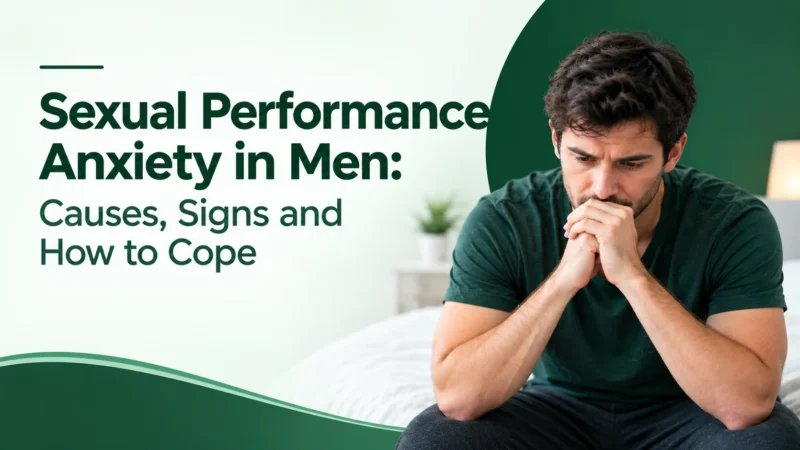


Worrying about Sexual Performance Anxiety in Men is more common than most men realise, and it can affect anyone regardless of age or experience. Concerns about achieving or maintaining an erection, lasting long enough, or meeting a partner’s expectations can interfere with arousal and make intimacy feel like a test rather than a shared experience. An occasional difficulty with erections does not automatically mean you have erectile dysfunction. This article explains what sexual performance anxiety is, how it affects the body, what causes it, and practical ways to cope, including when to seek professional help.
What Is Sexual Performance Anxiety?
Sexual Performance Anxiety in Men is a specific type of anxiety that arises around sexual activity. It differs from general anxiety because it is focused on a particular situation, the fear that your body will not respond the way you want it to during sex. The pressure can come from within, from a partner’s perceived expectations, or from beliefs about what sex should look like.
It can involve worry about achieving or maintaining an erection, lasting a certain amount of time before ejaculation, or satisfying a partner. Some men feel they need to perform to a particular standard, and when that standard feels threatened, anxiety takes over.
Sexual performance anxiety is not limited to new relationships where nerves might be expected. It can happen in long established relationships too, particularly after a difficult sexual experience or during periods of stress. It can affect sexual desire, arousal, and confidence, not just erections. Some men find that their interest in sex decreases because the anxiety makes intimacy feel like something to avoid rather than enjoy.
How Performance Anxiety Can Affect Erections
The Worry Arousal Cycle
Performance anxiety affects erections through a self reinforcing cycle. It starts with worrying about performance, which shifts attention away from sexual pleasure and toward monitoring whether the body is responding. This monitoring takes you out of the moment, making arousal harder to sustain. When arousal fades, the worry increases, confirming the fear that something is wrong. The next time intimacy begins, the memory of the previous difficulty creates anticipatory anxiety, and the cycle repeats.
The key issue is that arousal requires relaxation and attention to pleasurable stimuli. Anxiety does the opposite. It activates the body’s stress response, which narrows focus, increases muscle tension, and redirects blood flow away from where it is needed for an erection. The more you worry, the harder it becomes for your body to respond naturally.
Why Monitoring Your Erection Can Add Pressure
Repeatedly checking whether you are hard enough, or interpreting a temporary softening as a failure, takes attention away from the sensations and connection that support arousal. It turns sex into a performance review rather than an experience. Every time you check, you interrupt the mental state that allows arousal to build.
A temporary change in firmness during sex is normal. Erections naturally fluctuate in response to stimulation, attention, and physical state. Treating every fluctuation as a sign of failure adds pressure that makes the situation worse.
Why One Difficult Experience Can Affect the Next
A single episode of erection difficulty can create anticipatory anxiety for the next time. The mind remembers what happened last time and starts worrying about it happening again, which ironically makes it more likely to happen. This does not mean that every difficult experience leads to an ongoing problem. Many men have occasional erection difficulties and never develop a persistent pattern. But when the worry takes hold and starts affecting future experiences, it can become a self fulfilling cycle that is worth addressing.
Common Causes of Sexual Performance Anxiety
Fear of Losing an Erection
The most direct cause is worry about whether an erection will last through sexual activity. This fear can be constant during sex, with the mind focused on the erection rather than the experience. The irony is that the fear itself can contribute to the very outcome the person is worried about.
Previous Disappointing Sexual Experiences
A previous episode of erection difficulty, premature ejaculation, or an uncomfortable sexual experience can increase apprehension about future encounters. The memory of that experience creates a mental template that the mind projects onto the next situation, even if the circumstances are different.
Relationship Concerns and Fear of Judgement
Communication difficulties, fear of rejection, ongoing conflict, or uncertainty about what a partner expects can all contribute to performance anxiety. When you are not sure how your partner feels or what they want, the uncertainty can translate into anxiety during sex.
Stress, Fatigue and Everyday Pressures
Work stress, poor sleep, financial concerns, and emotional overload can all affect sexual interest and arousal. When your mind is occupied with daily pressures, it is harder to relax into intimacy. Fatigue in particular can reduce both desire and the body’s capacity to respond.
Unrealistic Expectations and Sexual Comparison
Pornography, social comparison, and beliefs about what constitutes good performance can create pressure that has little connection to real sexual experiences. Comparing yourself to idealised depictions of sex can make you feel inadequate, even when there is no basis for that judgement in your actual relationship. It is worth noting that pornography does not affect everyone in the same way, but for some men it can contribute to unrealistic expectations about how their body should respond.
Underlying Anxiety or Low Confidence
General anxiety, negative self talk, and fear of embarrassment can all feed into performance anxiety. If you tend to worry about being judged or making mistakes in other areas of life, that tendency can carry over into sexual situations. Low confidence in general may also make you more vulnerable to performance worries.
Physical Factors That Can Contribute to Erection Difficulties
It is important to acknowledge that physical factors can also contribute to erection difficulties. Diabetes, cardiovascular disease, certain medicines, and other medical conditions can affect erectile function. Anxiety and physical causes can coexist, and in some cases a physical factor may be the primary issue while anxiety makes it worse. This is why recurring erection difficulties deserve a medical assessment rather than being automatically attributed to anxiety.
Signs That Anxiety May Be Affecting Your Sex Life
The following signs may suggest that anxiety is playing a role in your sexual difficulties:
- Repeatedly worrying about sexual performance before intimacy
- Difficulty getting or maintaining an erection in stressful or high pressure situations
- Avoiding intimacy because of fear of another difficult experience
- Finding it hard to focus on sensations or connection during sex
- Feeling embarrassed, frustrated, or worried after sex
- Experiencing difficulties that vary by situation or partner
These signs may suggest anxiety, but they cannot establish the cause of erection difficulties on their own. A pattern of erection problems could have physical causes, psychological causes, or both, which is why a proper assessment is important if the difficulties are recurring.
7 Ways to Cope With Sexual Performance Anxiety in Men
1. Shift the Focus From Performance to Connection
One of the most powerful shifts you can make is to stop treating sex as a performance with a pass or fail outcome and start approaching it as a shared experience. Intimacy is about connection, pleasure, and mutual enjoyment, not about achieving a specific physical result. When you focus on being present with your partner rather than on what your body is doing, the pressure decreases and arousal becomes easier.
2. Talk Openly With Your Partner
Talking about what you are feeling can reduce the pressure significantly. The key is to use calm, non blaming language. Instead of saying something like you are frustrated because things are not working, you might say that you have been feeling anxious during sex and that you would like to take things slowly. A supportive partner will usually welcome this honesty, and sharing the concern often reduces its power immediately.
3. Slow Down and Remove the Expectation of Intercourse
Not every sexual encounter needs to lead to intercourse. Spending time on mutually comfortable, non pressured intimacy without the goal of an erection or penetration can help reduce the feeling that your body must perform on demand. This might involve touching, kissing, or other forms of closeness that feel good without the pressure of a specific outcome.
4. Practise Grounding and Slow Breathing
Gentle breathing techniques and attention to present moment sensations can help manage anxiety during sex. Slow, deep breathing activates the body’s relaxation response, which is the opposite of the stress response that anxiety creates. Focusing on physical sensations such as warmth, touch, or the sound of your partner’s voice can help bring your attention back to the present. These techniques may help manage anxiety, but they are not guaranteed to resolve erection difficulties on their own.
5. Challenge Unhelpful Thoughts
The way you think about sex and performance affects how you feel. Common unhelpful thoughts include beliefs like I must perform perfectly, or if I lose my erection once I will always lose it. Challenging these thoughts means replacing them with more balanced ones. For example, you might replace I must perform perfectly with one difficult experience does not define my sexual health, or my worth is not determined by whether I get an erection every time. Over time, this shift in thinking can reduce the pressure that feeds anxiety.
6. Address Sleep, Stress and Alcohol
Practical lifestyle factors can make a real difference. Adequate rest supports both desire and the body’s capacity to respond. Regular physical activity helps manage stress and supports cardiovascular health, which is important for erectile function. Heavy alcohol consumption before sex can impair both arousal and judgement, and while a small amount may feel relaxing, too much often makes erection difficulties worse.
7. Seek Professional Support When the Pattern Persists
If performance anxiety continues to affect your sex life despite your own efforts, professional support can help. A GP can check for physical causes, a psychologist or counsellor can help with anxiety management, and a qualified sex therapist can work specifically with sexual concerns. There is no shame in seeking help. Sexual performance anxiety is a recognised and treatable concern, and professional guidance can make a significant difference.
Can Therapy Help With Sexual Performance Anxiety?
Cognitive Behavioural Therapy (CBT)
Cognitive behavioural therapy, or CBT, is a well established approach for anxiety. In the context of sexual performance anxiety, CBT can help identify catastrophic thinking patterns, such as the belief that one episode of erection difficulty means you will never have a normal sex life again. It works on reducing anticipatory worry and changing behaviours that maintain the anxiety, such as avoiding intimacy or constantly monitoring performance. A 2025 clinical model of sexual performance anxiety emphasised that the goal of therapy is not to guarantee that an erection will always happen, but to reduce the fear and pressure around the possibility that it might not. This reframing is central to how CBT approaches the problem.
Psychosexual or Sex Therapy
Psychosexual therapy, also known as sex therapy, works specifically on sexual expectations, confidence, communication, and the anxiety arousal cycle. A sex therapist can help you understand the patterns that maintain performance anxiety and develop practical strategies to break them. This type of therapy may involve exploring beliefs about sex, communication exercises, and techniques for reducing performance pressure.
Couples Counselling
When performance anxiety is affecting a relationship, couples counselling can help. It provides a structured space to address communication barriers, relationship tension, and unspoken expectations that may be contributing to the anxiety. Working together as a couple can reduce the feeling that one person is carrying the problem alone.
What Does the Research Say?
A 2026 systematic review of digital psychological interventions for male sexual dysfunction reviewed 21 studies and found that online cognitive behavioural therapy and psychoeducation showed promise for improving erectile function and sexual satisfaction. However, the review also noted that adherence to these digital programmes was low and that the studies varied in design, which means the evidence is promising but not conclusive for every intervention or individual. The findings suggest that psychological approaches can play a meaningful role in treatment, particularly when combined with other forms of support, but more research is needed to understand which approaches work best for whom.
Can Erectile Dysfunction Medication Help With Performance Anxiety?
Medicines such as sildenafil and tadalafil can help some men with erection difficulties when they are medically appropriate. These medicines work by supporting the physical erection response, increasing blood flow to the penis during sexual stimulation.
However, it is important to understand that these medicines support the physical side of erections but do not directly resolve every psychological or relationship concern. If anxiety is the primary issue, medication may help with the physical response but the underlying worry may remain. Treatment depends on the cause and may combine medical care with psychological support.
You should not take ED medicines without appropriate medical advice. Combining ED medicines with nitrate medicines, including recreational amyl nitrite, can cause a dangerous and potentially life threatening drop in blood pressure. A GP can assess whether medication is appropriate for you, check for interactions with other medicines you are taking, and recommend the right approach based on your individual situation.
No specific dose should be recommended without medical assessment, and medication is not guaranteed to eliminate anxiety. If you are considering ED medication, speak with your doctor about whether it is appropriate and how it fits into your overall approach to the problem.
When Should You See a Doctor About Erection Difficulties?
It is worth seeing a doctor if:
- Erection difficulties happen repeatedly or are becoming more frequent
- The problem is causing you distress or leading you to avoid intimacy
- You have noticed other symptoms, a change in libido, or a possible medication related cause
- You have risk factors for diabetes, high blood pressure, or cardiovascular disease
Recurring erection difficulties deserve medical assessment rather than automatically being attributed to anxiety. A doctor can check for physical causes, review your medicines, and help determine whether the issue is primarily psychological, physical, or a combination of both.
Sudden severe symptoms or chest pain during sexual activity require urgent medical attention. If you experience chest pain, severe dizziness, or other serious symptoms during or after sex, seek emergency care immediately.
Final Takeaway
Sexual Performance Anxiety in Men is a real and manageable concern, not a personal failure. The pressure to perform can create a cycle of worry that makes arousal harder, but that cycle can be broken. Reducing pressure, communicating openly with your partner, and using practical strategies like grounding and reframing unhelpful thoughts can all help. When the pattern persists, professional support from a GP, psychologist, or qualified sex therapist can make a significant difference.
Persistent erection difficulties should be assessed because physical and psychological factors may overlap. A doctor can check for underlying medical conditions and help you find the right combination of approaches. The goal is not to guarantee that an erection will always happen, but to reduce the fear and pressure that make intimacy harder than it needs to be.
Was this article helpful?
Your feedback helps us improve our health guides.
Quick Answers to Your Questions
Find helpful information about our products, ordering process, delivery and more.
01 Can performance anxiety cause erectile dysfunction?
Yes, performance anxiety can contribute to erection difficulties. Worrying about performance activates the body's stress response, which interferes with the relaxation and blood flow needed for an erection. However, not every erection difficulty is caused by anxiety, and recurring problems should be assessed by a doctor to check for physical causes.
02 Why do I lose my erection when I start worrying?
Anxiety shifts your focus away from sexual stimulation and toward monitoring your body's response. This activates the stress response, which narrows blood vessels and redirects blood flow away from the penis. The more you worry, the harder it becomes for your body to maintain an erection.
03 Can performance anxiety happen even when I am attracted to my partner?
Yes. Attraction and performance anxiety are separate things. You can be deeply attracted to your partner and still experience anxiety about your sexual performance. The anxiety is about the pressure to perform, not about your level of attraction or desire.
04 How can I stop overthinking during sex?
Practising grounding techniques, such as slow breathing and focusing on physical sensations, can help bring your attention back to the present. Shifting your focus from performance to connection, and talking openly with your partner about what you are feeling, can also reduce the mental pressure that feeds overthinking.
05 Can performance anxiety go away on its own?
In some cases, particularly when it is related to a specific stressful situation, performance anxiety may resolve on its own. However, if it has become a recurring pattern, it is less likely to improve without some form of intervention, whether that is self help strategies, therapy, or medical assessment.
06 Does performance anxiety mean I have ED?
Not necessarily. An occasional difficulty with erections, especially in stressful situations, does not automatically mean you have erectile dysfunction. ED is typically defined as persistent or recurring difficulties. If you are concerned, a doctor can help determine whether what you are experiencing meets the criteria.
07 Can therapy help with erection related anxiety?
Yes. Cognitive behavioural therapy and sex therapy have been shown to help with sexual performance anxiety. A 2026 systematic review found that online CBT and psychoeducation showed promise for improving erectile function and sexual satisfaction, though results vary between individuals and more research is needed.
08 Should I take Viagra or Cialis for performance anxiety?
That depends on your individual situation. These medicines can help with the physical erection response, but they do not directly resolve anxiety. If you are considering medication, speak with your doctor about whether it is appropriate, what dose is right for you, and whether combining it with psychological support would be more effective.